Fort Lytton Military Reserve: A documentary record of colonial coastal defence

Located at the mouth of the Brisbane River, the Fort Lytton Military Reserve represents a critical, preserved node in Queensland’s 19th-century coastal defence network. Established in 1881 to protect Brisbane from the perceived threat of foreign naval incursions, the site remained an active military installation through both World Wars. Unlike polished museum sites, Fort Lytton retains a grounded, utilitarian atmosphere, with its subterranean tunnels and earth-mounded gun emplacements providing a stark record of historical military engineering.
A history of colonial fortification
The strategic importance of Fort Lytton was defined by its location at the narrowest point of the Brisbane River entrance. Following the withdrawal of British imperial forces, the Queensland government commissioned the site to secure the colony against potential maritime attack. The layout is dominated by a pentagonal fort, featuring a hidden, reinforced earth-mound design intended to deflect artillery fire while remaining inconspicuous from the water. Throughout the late 1800s and into the 20th century, the reserve functioned as a training ground and a permanent defensive garrison, serving as a primary site for testing the colonial response to shifting global geopolitical threats.

The surviving subterranean infrastructure
The defining characteristic of the reserve is its subterranean network. The fortification was built into the landscape, with interconnected tunnels and ammunition magazines situated beneath the primary gun positions. Walking through these damp, low-ceilinged passageways today offers a direct, unvarnished look at the claustrophobic reality of 19th-century military life. The surviving reinforced concrete structures, original iron fittings, and manual loading mechanisms remain largely as they were during the fort's peak operation. It is an essential location for those interested in documenting the heavier, unpolished aspects of Queensland’s defensive history.

Accessing the reserve
Fort Lytton is situated within a dedicated national park and heritage reserve, easily accessible by vehicle from the Brisbane metropolitan area. While the site is actively managed for preservation, it avoids the heavy, commercialised tourism found at other heritage locations, maintaining its original, industrial character. Visitors should note that access to specific sections of the tunnel network may be restricted to preserve the structural integrity of the site. It is a necessary stop for anyone building a comprehensive record of Queensland's abandoned or historical military infrastructure.
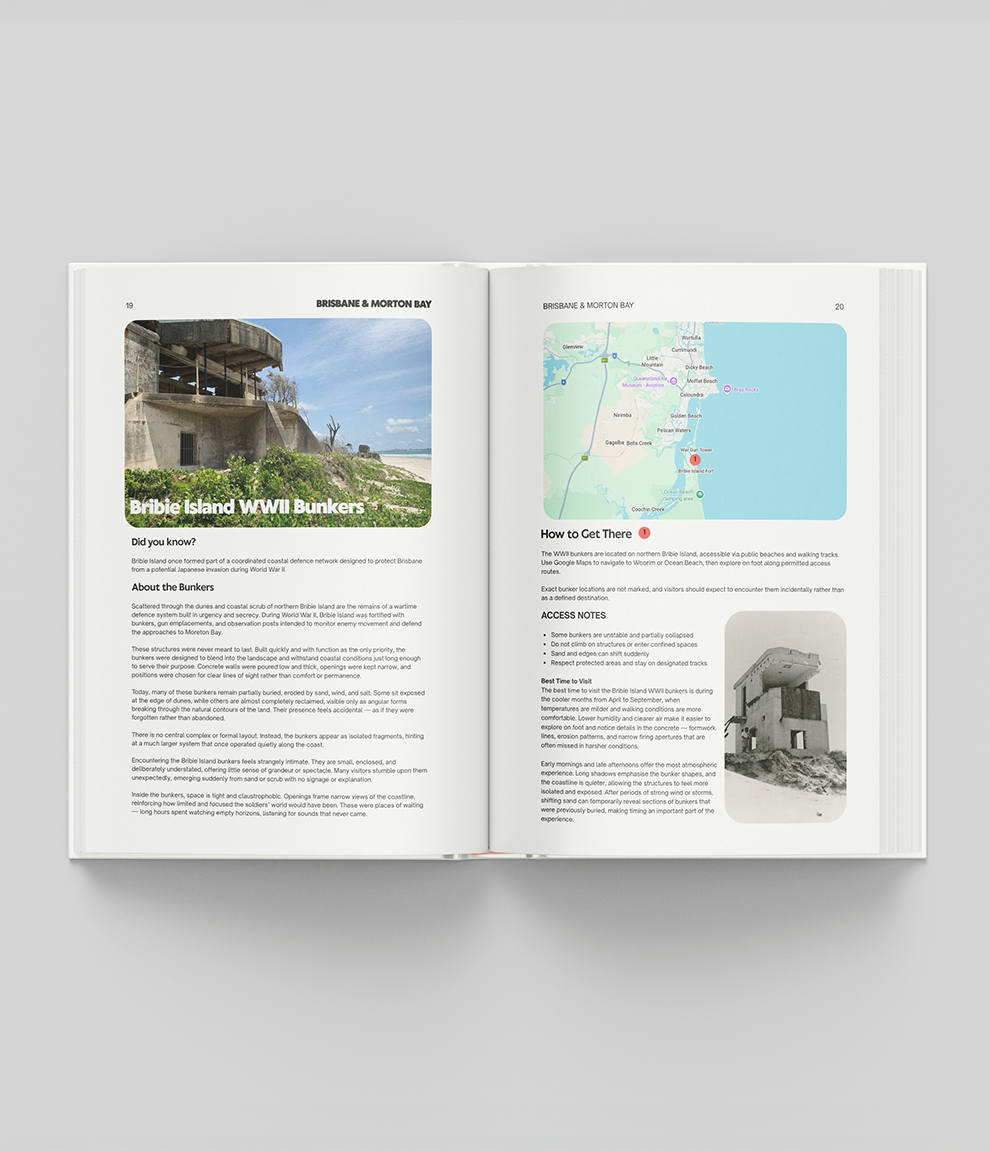
For complete access details, site maps, and a comprehensive record of this location alongside other abandoned and heritage sites across the state, you can pick up a copy of the Hidden Gems Queensland guide below.